
Digital Skills for Children
Give children the digital fluency their generation will need from day one.
4 weeks · 12 hours (interactive sessions, activity-based learning)Details →
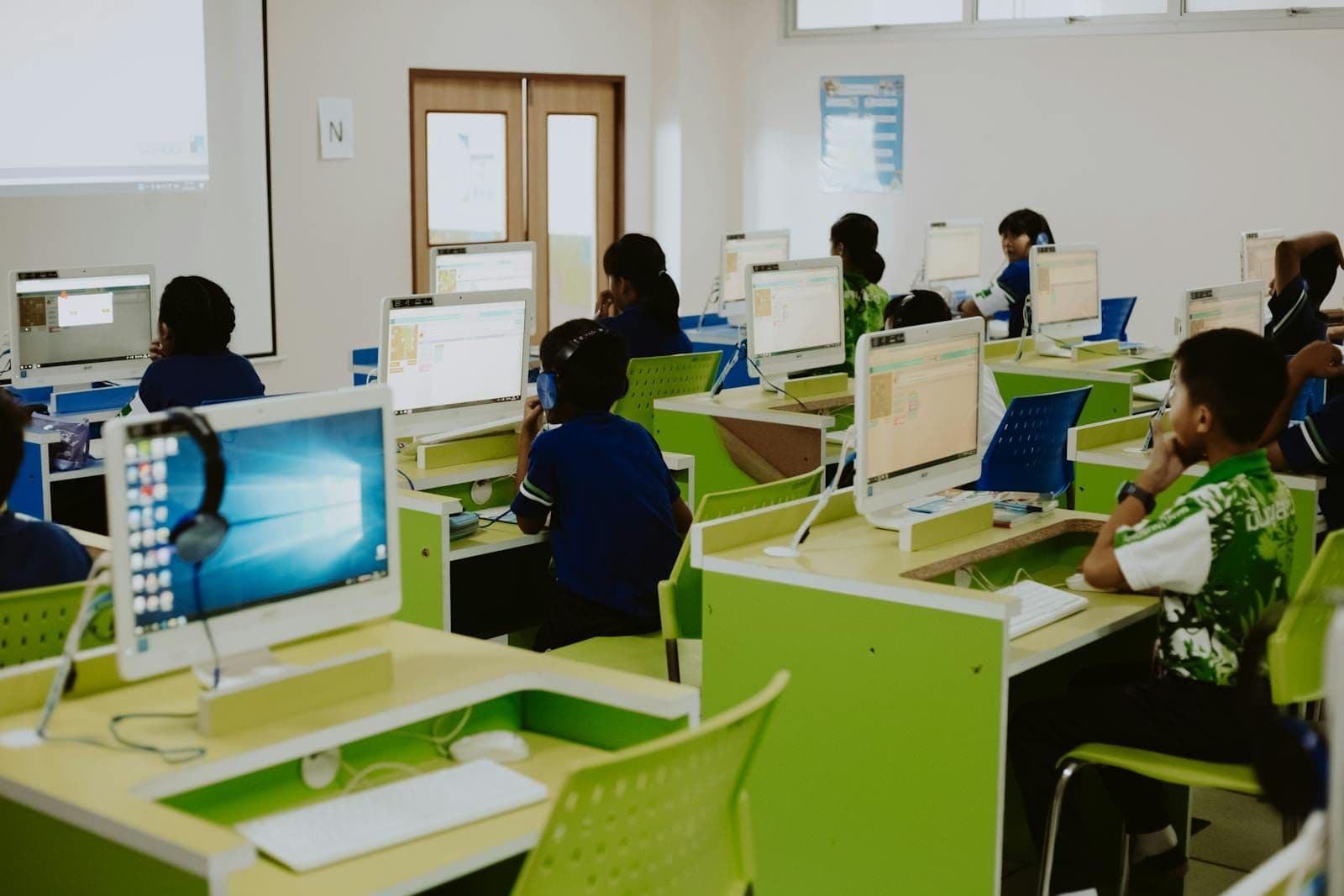
Teach children to think like builders, not just users.
Coding teaches logical thinking, problem-solving, and creativity — skills that benefit children in every subject and every career, whether or not they become programmers. This program uses Scratch and beginner-friendly tools to introduce 8–14 year-olds to coding through games, animations, and interactive projects they build themselves, making programming feel achievable and fun.
Sessions are structured so that every child leaves with something working — not just concepts explained on a whiteboard. The group atmosphere is deliberately collaborative: children test each other's projects, give simple feedback, and fix bugs together, which removes the frustration that often stops beginners. Parents are welcome to attend the final showcase session, where each child demonstrates their projects and talks through the thinking behind them.
The final project — chosen by each child from a short list of formats including an interactive game, a quiz, or an animated story — is built over the last three sessions and presented at the showcase. Each child explains one design decision they made and one problem they solved along the way. Those who want to continue after the program have a clear path into more structured programming environments, and the Scratch projects they leave with serve as a portfolio they can share with teachers or enter into school technology competitions.
Children complete the program having built 3–4 original Scratch projects, with genuine coding logic skills, a problem-solving mindset, and the confidence to continue learning independently — a high-leverage early investment in their future. Children also develop the habit of breaking unfamiliar challenges into smaller steps — a transferable thinking skill that benefits them in mathematics, writing, and everyday problem-solving well beyond the classroom.
Give children the digital fluency their generation will need from day one.

Confidence, communication and decision-making for young people.
Camps, clubs and challenges that grow skills outside the classroom.